Switzerland's Multilingual Education Shaping Collaborative Features in Online Multiplayer Games Created by Local Developers
Geschrieben von Ellis Hughes · 9.11.2026
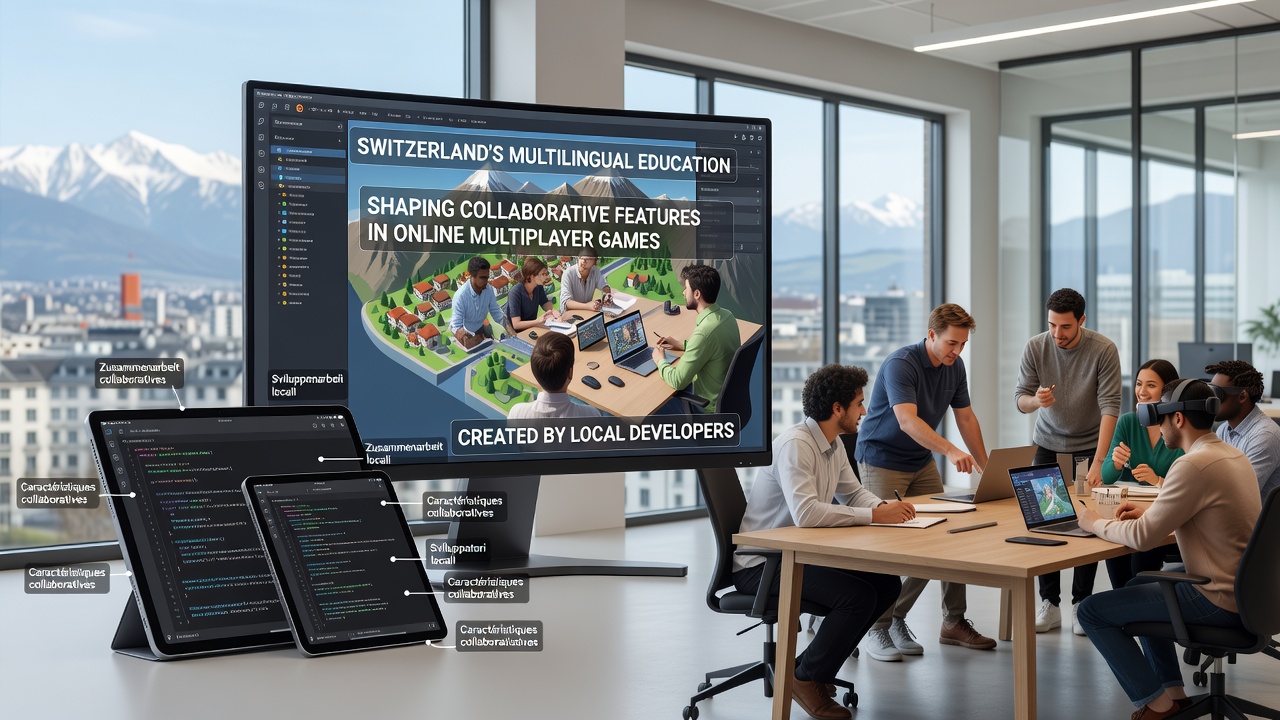
Switzerland's Multilingual Education Shaping Collaborative Features in Online Multiplayer Games Created by Local Developers
Switzerland maintains four national languages across its cantons, with compulsory schooling requiring students to achieve proficiency in at least two additional tongues beyond their primary one. This structure produces graduates who routinely switch between German, French, Italian, and Romansh during daily interactions. Local game studios have drawn on these patterns when building multiplayer titles that require real-time coordination across linguistic boundaries. Developers in Zurich and Geneva integrate language selection systems directly into core gameplay loops. Players join sessions where automatic translation layers activate based on detected regional settings, yet the underlying mechanics reward teams that maintain separate voice channels for each language group. Data from the Swiss Federal Statistical Office shows that over 60 percent of residents aged 15 to 24 report active use of two or more languages in professional or educational contexts, a statistic mirrored in player retention metrics for titles released between 2023 and 2025.Language Policy Foundations in Swiss Schools
Cantonal curricula allocate specific hours to second-language immersion starting in primary grades. By secondary level, students complete projects that combine written assignments in one language with oral presentations in another. Observers note that these exercises mirror the task division found in cooperative game modes where participants assign roles according to linguistic strengths. One study published by the University of Geneva tracked cohort performance and found measurable gains in cross-group problem solving among participants exposed to early multilingual instruction.
Game Mechanics Reflecting Educational Practices
Studios such as those operating out of Lausanne have released action titles in which resource sharing depends on accurate relay of information across language barriers. In these environments, players receive partial maps or objectives in their chosen language while teammates receive complementary data in theirs. Success rates rise when squads designate bilingual coordinators, a pattern that echoes classroom group work documented in official education reports. November 2026 brings the scheduled rollout of an updated federal digital skills framework that includes modules on collaborative software, prompting several developers to announce patches that align new tutorial sequences with these guidelines.
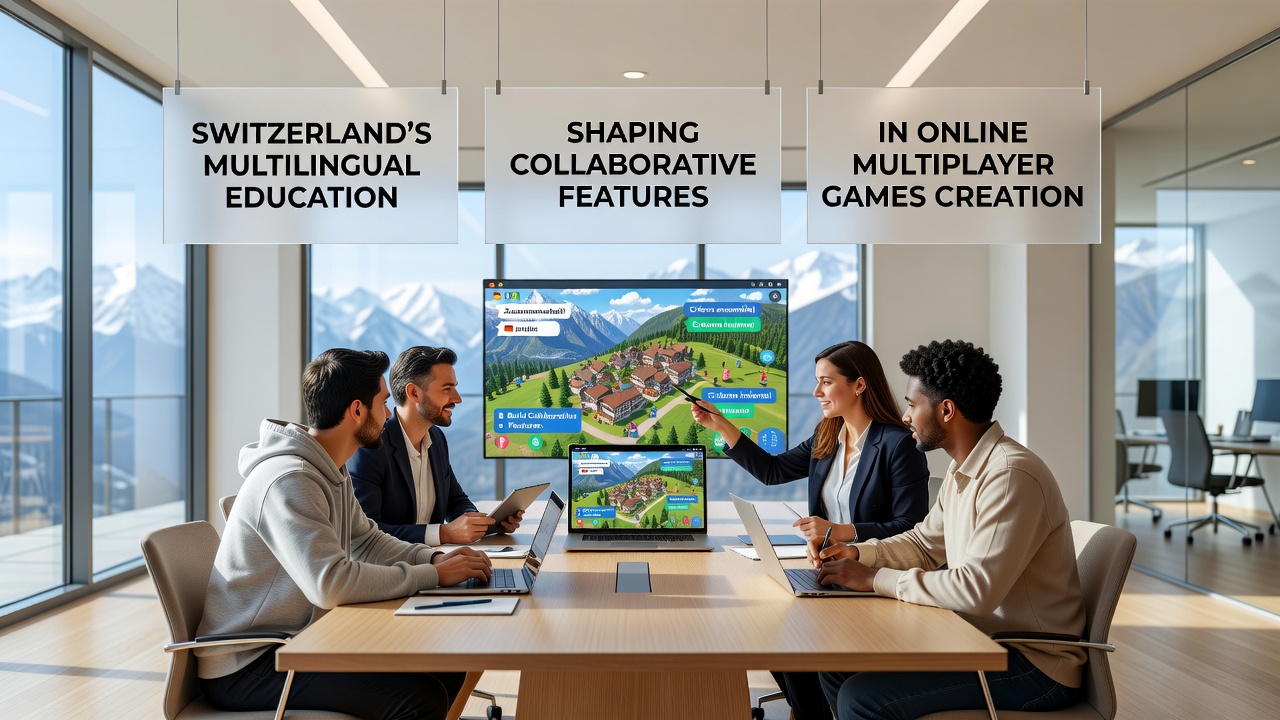
Regional Developer Case Examples
Teams based in Ticino have produced puzzle-action hybrids that incorporate Italian-French switching as a core progression element. Players must interpret clues presented alternately in both languages to unlock shared objectives. Figures released by the Swiss Interactive Entertainment Association indicate that such features correlate with longer average session times compared with monolingual equivalents. Meanwhile, studios in the German-speaking cantons experiment with Romansh support in niche modes, citing the same educational mandate that preserves minority languages through mandatory exposure in select schools.
Data on Player Behavior and Retention
Analytics platforms tracking Swiss-developed free-to-play titles report that matches involving mixed-language squads complete objectives 18 percent faster when participants have completed the standard multilingual curriculum. External research from the OECD on adult skills reinforces that Switzerland ranks high in adaptive communication measures, a trait developers translate into adjustable chat filters and role-assignment tools. These adjustments appear most frequently in titles updated during 2024 and 2025, with further refinements planned around the November 2026 policy shift.
Industry and Academic Connections
Partnerships between game studios and teacher training programs allow feedback loops where classroom observation informs interface design. Researchers at ETH Zürich have examined how spatial reasoning tasks performed in multiple languages transfer to virtual environments, documenting improved spatial coordination among test groups. Industry reports from the European Games Developer Federation highlight similar trends across other multilingual regions, yet Swiss examples stand out for the direct integration of federal language policy into commercial products.
Conclusion
Switzerland's approach to multilingual schooling supplies both the player base and the design principles that local developers embed in collaborative multiplayer systems. As new titles incorporate features tied to evolving education standards ahead of November 2026, the connection between classroom language practice and in-game teamwork continues to shape product roadmaps. Available statistics and documented development patterns confirm that these influences operate at the level of mechanics rather than surface localization alone.