Regional Dialects Shaping Voice Coordination Strategies in Swiss Multiplayer Puzzle Titles
Geschrieben von Harper Washington · 28.9.2026
Regional Dialects Shaping Voice Coordination Strategies in Swiss Multiplayer Puzzle Titles
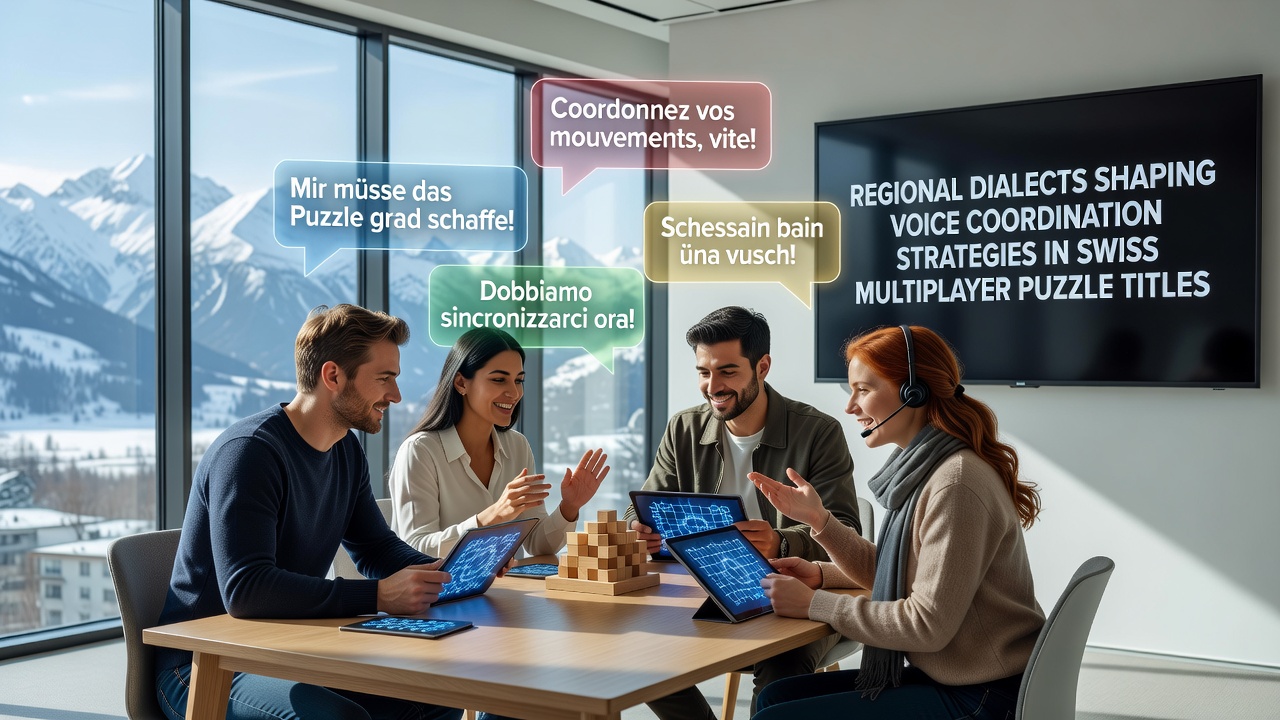
Switzerland maintains four national languages with distinct regional dialects that influence how players communicate during multiplayer puzzle sessions in browser and mobile titles. Data from the Swiss Federal Statistical Office shows German speakers comprise about 63 percent of the population while French accounts for 23 percent, Italian for 8 percent and Romansh for under 1 percent; these figures drive varied approaches to voice chat coordination in games that require synchronized problem solving.
Linguistic Regions and Game Communication Patterns
Players in German-speaking cantons often rely on Swiss German dialects rather than standard High German when issuing quick commands during puzzle sequences, and this choice creates specific vocabulary shortcuts that teams from other regions must learn to interpret. Observers note that Bernese or Zurich variants introduce unique terms for spatial directions and object manipulation that differ from textbook German, so cross-regional groups frequently default to English as a neutral bridge language during joint sessions. Researchers at institutions like the University of Zurich have documented how these dialect preferences affect response times in timed puzzle challenges where precise verbal cues determine success rates.
French-speaking players from the western cantons tend to incorporate local expressions that reference everyday objects in ways that align with puzzle mechanics, while Italian-speaking participants in the south adapt their phrasing to match the rhythmic demands of cooperative levels. Those who study multiplayer logs report that Romansh speakers, though fewer in number, sometimes blend their dialect with German or Italian elements to maintain clarity when voice channels connect mixed groups.
Adaptation Techniques in Puzzle Coordination
Game developers have observed that voice coordination improves when teams establish shared glossaries early in a session, and this practice appears more frequently in titles that support Swiss player bases. One documented case involved a browser-based puzzle series where participants from multiple linguistic regions created hybrid callouts combining elements from two or three dialects; the resulting shorthand reduced miscommunication during complex mechanical sequences. Data indicates that sessions conducted entirely in one regional dialect show higher error rates when an outsider joins, prompting many groups to switch to multilingual strategies within the first few minutes of play.
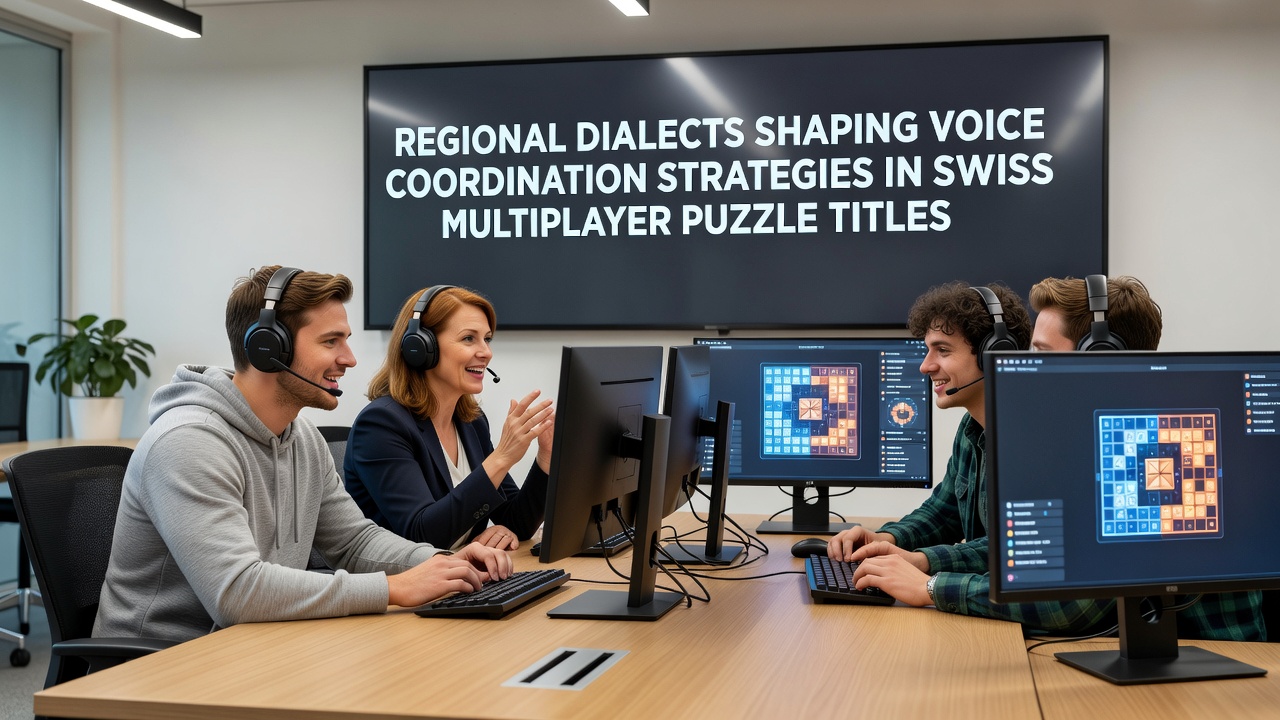
September 2026 brought updates to several popular mobile puzzle platforms that added dialect recognition features for Swiss users, allowing voice systems to better parse local pronunciations of key terms. Industry reports from the Interactive Games and Entertainment Association highlight similar adaptations in other multilingual markets, where developers integrate flexible audio processing to support regional speech patterns without forcing standardization.
Examples from Existing Titles and Player Behaviors
Take one community of players in a long-running cooperative puzzle title who formed groups based on primary language use; those groups developed distinct coordination rhythms that reflected their home dialects, with German-speaking teams favoring concise directional phrases and French-speaking teams leaning on descriptive sequences. A separate study released by researchers at ETH Zurich examined chat logs from 2025 and found measurable differences in coordination efficiency tied to whether teams stayed within one linguistic region or mixed participants across borders. These patterns emerge consistently in games that reward rapid verbal exchanges rather than text-based instructions.
Players from Ticino often insert Italian phrasing when describing visual elements that lack direct equivalents in other languages, while participants from Graubünden sometimes reference Romansh terms for specific puzzle components. Such mixing occurs naturally in public lobbies where random matching connects individuals from different cantons, and groups that succeed long term tend to document their evolving callout systems for later reference.
Broader Context in Swiss Gaming Infrastructure
Switzerland's commitment to multilingual public services extends into digital entertainment spaces, where platforms accommodate the same language diversity found in official communications. Academic work from the University of Geneva has tracked how these national policies influence private game servers that cater to local audiences, resulting in voice features that tolerate dialect variation without requiring translation layers. Figures from language surveys confirm that younger demographics maintain stronger dialect use in informal settings like gaming compared with formal education contexts.
External observers have recorded cases where teams deliberately select puzzle titles that support multi-language voice channels because those environments reduce the friction caused by regional speech differences. The approach allows players to retain their natural dialects while still achieving the synchronized actions required for advanced levels.
Conclusion
Regional dialects continue to shape coordination methods in Swiss multiplayer puzzle titles through vocabulary choices, response timing and team formation habits. Available data and documented player practices illustrate how linguistic diversity translates into practical gameplay adjustments across German, French, Italian and Romansh communities. These dynamics persist as new titles and platform updates appear, reflecting the same language distribution patterns measured by national statistics.